Category: Uncategorized

  • Influencer Marketing: Calvin Klein

    *All Images belong to Calvin Klein*

    In recent weeks, there has been a new fashion trend circulating on social media platforms since the release of Hulu’s series Love Story, based on the real-life story of JFK Jr. and Carolyn Bessette. Influencers have taken to their platforms with posts that are outfits, makeup tutorials, and hairstyles (even as far as dying their hair after watching the series), inspired by Carolyn and her iconic looks. One of the most common brands mentioned when discussing Carolyn’s fashion was Calvin Klein, the brand that employed her and launched her romance with JFK Jr. Calvin Klein has been known for its classic fashion as well as its iconic collaborations with its models, ranging from Brooke Shields to, as of recent, Bad Bunny. But what if Calvin Klein started utilizing the changing landscape of advertising and launched an influencer marketing campaign?

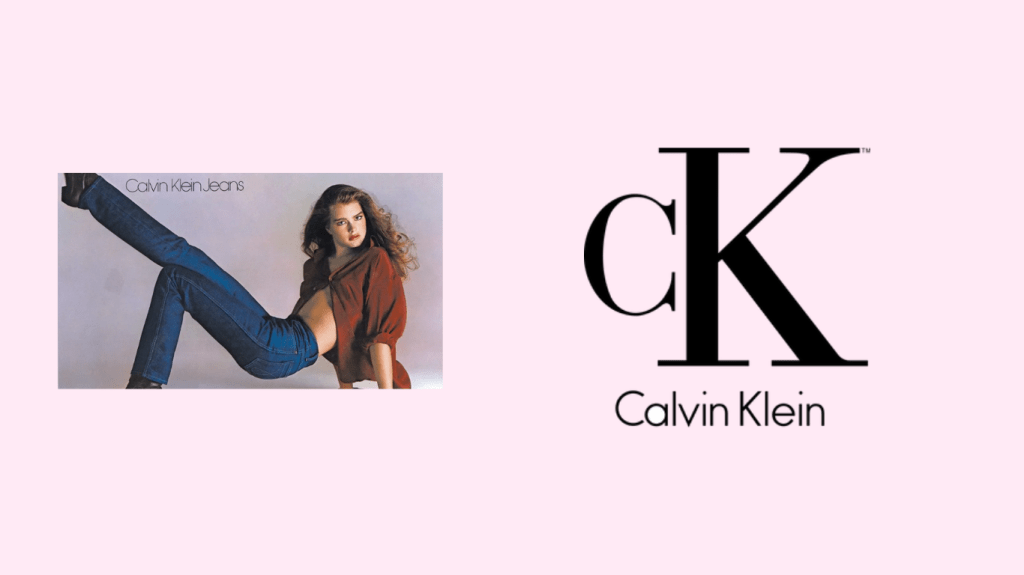
    Calvin Klein has iconic ads for their company of portraits of their models dressed in their clothes, ranging from their denim to their underwear. I believe if Calvin Klein begins to utilize the influencer space properly, they can see a real impact and ROI for their brand. I would set the objectives of the campaigns as the following: Utilize the current discussion on Carolyn Bessette’s iconic looks and raise brand awareness through influencers who have a similar fashion sense to her, and have a major increase in conversion through shopable ads, specifically through Instagram, to mimic the iconic billboard and in-store visuals. This can also be achieved through a series of sponsored posts from the influencers and utilizing affiliate marketing of a specific discount that is exclusive to the influencer’s code on the site. In regard to the content, the influencers would post, I think it would be best to mimic the iconic ads, a simple portrait with the iconic Calvin Klein pieces. Some of the pieces can be remakes of Carolyn’s most iconic looks, like the camel skirt and the simple black top, or the classic Calvin Klein denim. The influencers can also post a series of stories with affiliate links, showing how Calvin Klein fits seamlessly into their daily routine, much like it did for Carolyn. 

    The influencers I would recommend for this campaign are Emma Pritchard and Greta Tomé. Emma Pritchard is from Massachusetts (a nod to the Kennedys’ iconic home state) and has a total of 383K followers on Instagram and has a similar fashion sense to Carolyn, of simple yet classic outfits. Greta Tomé is from NYC and shows her life living on the Upper East Side, as well as her classic style ( a nod to the main setting of the series and the couple’s real-life home). Greta has a total of 308K followers on Instagram.

    Throughout the campaign, we will utilize the collaboration feature on Instagram and use Instagram insights to track the amount of engagement and click-throughs to the site, as well as purchases directly through Instagram’s shop feature. We will also track the number of times the specialized coupon code is used to track the number of customers who are coming directly from the influencers’ page. The only real challenge I can foresee for this campaign is that the allure of Calvin Klein’s ads may be lost on the younger users on the app. But this can be fixed by Calvin Klein posting a series of throwback posts to show the influences their ads and fashion have had on society over the years.
  • Paid Social Media Ad Audit: #TeamPepsi

    To complete a paid social media ad audit, I chose to use Pepsi’s latest ad campaign, which I have heard about widely, from social media ads to podcast placement ads. Pepsi launched “The Pepsi Challenge” over the last few weeks to invite soda lovers to taste test Pepsi Zero and Coca-Cola Zero Sugar and pick a “team”. 

    The objective of the ad was to increase conversions through social media engagement, as the ad drives conversations about which brand tastes better by encouraging soda consumers to go to stores to buy both brands, post their taste tests on social media, and choose “TeamPepsi.” The actual ad utilizes the actual competition between the brands through their visuals. Pepsi brought in an animated polar bear, which is widely known as a Coca-Cola image, and had the bear complete a blind taste test and pick its own competitor as the better-tasting soda, and shows the bear being torn by its choice in the taste test and being jealous of those who can openly enjoy their Pepsi’s out in public and ends with the bear ultimately accepting its fate asa pepsi lover. Much like the bear, Pepsi alludes in its copy that they are accepting of soda consumers who will complete the taste test and join “TeamPepsi.”

    The ad was ultimately successful in its engagement with followers and users. On Facebook alone, the ad had 112k Likes, 2.3K comments, 11K shares, and a total of 3.1M views as of February 2026. One could assume this ad is targeted to those soda consumers who are passionately opinionated about the age-old question of what’s better: Pepsi or Coke? 

    While the ad has ultimately successful in reach and engagement, I would recommend the following adjustments for the ad to reach maximum potential and ROI for the brand.

    Firstly, while I think the use of the Coca-Cola bear was a fun take on the way to depict the competition between the brands over the years, I think messaging could be misconstrued by consumers, thinking it’s a Coca-Cola ad rather than a Pepsi ad. I think Pepsi would do well with developing its own mascot or image that can be tied to the brand, the way Coca-Cola has done with polar bears, and using that for future ads.

    Another recommendation I have for Pepsi for the success of this campaign would be to utilize influencers for the social media ads. Utilizing social media influencers can help spread the campaign as well as the taste test experience, similarly to other viral campaigns we’ve seen on social media, like the “healthy diet coke” trend that went viral on TikTok back in 2023. Using social media influencers for this campaign can also build up trust between the brand and its target consumer by giving real faces to the campaign as opposed to an animated mascot for the leading competitor.

  • Daphne By Paige Desorbo: A Deep Dive on Key Metrics

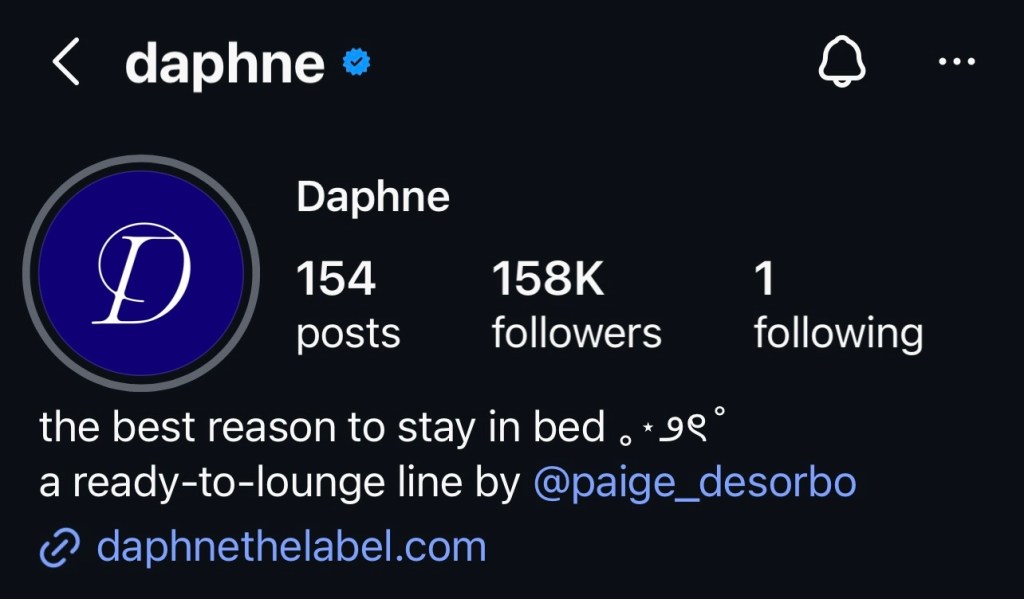
    The brand I chose to analyze its key metrics between organic and paid strategies was the ready-to-wear lounge wear brand Daphne. Daphne was created in 2025 by social media influencer, reality star, and podcast host Paige Desorbo. Paige was inspired to create Daphne after not being able to find ready-to-wear lounge pieces that would be comfortable to sit in at home on the couch, but also be ready to grab a coffee with a friend. Paige announced the brand in June of 2025 to her following of 1.6M followers on Instagram. 

    I chose to specifically narrow in on the brand’s Instagram and its key metrics. The first metric I chose to look into was the following count. Daphne, as of January 2026, has acquired a following of 158K since its launch in June. When compared to founder Paige Desorbo’s follower count, there is definite room for growth for the brand’s exposure.  

    Screenshot

    From my scroll and study of the profile, Daphne tends to average about 200-400 likes on each post. This is obviously very low for the high follow count the brand has. To reference Understanding Social Media ROI by Olivier Blanchard, I then moved on from the “vanity” metrics, like follow counts and likes (while not to negate its importance for the brand’s ability to grow) and began to break each post for more concrete data points that will tell me more about the actual exposure and reach the brand has at this current moment. Going further into the brand’s engagement, each post typically receives a range of 2-40 comments, depending on the call to action in the post’s caption. The posts with the most comments featured actual people or models in the posts, rather than the BTS brand posts, for the process of creating each “drop” for the line. Which was something I made note of, as this is a brand created by a reality personality, so the consumer liking and engaging in posts that featured her or actual people made sense to me. I also noticed Daphne posted a majority of organic or UGC posts rather than sponsored ads or collaborations.

    I began to zoom out on the social media profile in order to gather what appears to be Daphne’s main priority on its Instagram. As previously stated, this is a new brand, so it appeared to me that Daphne is focused on narrowing in on what their ideal consumer actually is and what the brand image will become in order to attract them. Daphne began its Instagram posting behind- the-scenes to the launch and creation of the brand’s first capsule collection and then pivoted to more people-facing content, whether it be through using fellow social media influencers as models for its newest items or Paige herself. I believe this was an intentional shift of the brand, realizing the people who want to buy from this brand want to buy a piece that connects to a social media/ reality personality who has either a lifestyle or literal style they are actively trying to achieve. 

    When it comes to improvements the brand can make, I think the brand could benefit from utilizing more sponsored posts from fellow social media personalities that align with the chic, easy, on-the-go vibe the brand’s clothing represents.  This could also help Daphne begin to tailor and zone in on their ideal consumer and create a full persona for whoever that may be.

    Sources:

    Blanchard, O. (2011). Social Media Roi: Managing and measuring social media efforts in your organization. Que.

  • The Importance of Team Agreements

    Imagine establishing a new company without setting any rules for your employees or yourself regarding company culture and expectations. 

    Sounds like an immediate HR issue…huh? 

    That’s the same issue for Design Sprints. 

    It is crucial that, before starting any sprint or assigning any of the roles in your sprint, your Design Sprint Team takes some time to establish some team agreements to be able to execute your sprint from phase 1 to testing your prototype. Team agreements can make or break not only team moral but the success of your product,good or service as a whole. Coworkers who trust each other and feel trusted by each other, are a cornerstone of high-performing teams. 

    And that’s exactly what my team has done. Below, I have included our team agreements and why we felt they were needed in order to complete our design sprint. 

    This is our section on our Miro board that we keep at the forefront of every phase and meeting we have as a team.

    While we had a lot of sticky notes, there were a few overarching themes throughout all of the rules. Doing this can help teams develop a shared sense of responsibility, make it easier to identify and discuss both positive and negative behavior, empower the leader to keep the team accountable, and enhance the team’s productivity.

    1. Time Management: We agreed on the same due date for all work we do together. We agreed on the same meeting time and day (this may vary depending on how your sprint is split time-wise) This allows us to have clear time frames for the sprint and allow work to progress in a timely manner. 
    2. Presence: This is a crucial team agreement in today’s digital age, where we are constantly surrounded by screens and distractions. We agreed on no phones/keeping phones and notifications on silent. This allows for dedicated attention to our work and each phase of the sprint. 
    3. Respect: This team agreement is broad but very important. We agreed to welcome all ideas with an open mind and react with kindness first and foremost. While there may be moments of conflict throughout the sprint, it’s important to remain respectful while navigating through those moments. This also ties into the physical Miro board. We agreed to be respectful and not delete anyone’s entries unless permitted to do so. 
    4. Prep: We agreed to come to each meeting after reading and watching each video that correlates with the phase we are approaching. We then later updated this agreement to come prepared to all meetings with any work possible to be done individually done ahead of time, so we can short-track directly to voting and be the most efficient with our time.

    Once you establish team agreements, you will be able to move effectively through the Design Sprint Process while making sure each member of the team has a voice and a say in the culture and process of the sprint. 

    Sources: 

    Koponen, Ari-Pekka. “The Essential Guide to Agile Team Working Agreements.” Swarmiacom RSS, Swarmia, 7 May 2025, www.swarmia.com/blog/agile-team-working-agreements/ 

    Milstein, Sarah. “How Team Agreements Promote High Performance.” LeadDev, 23 Mar. 2023, leaddev.com/culture/how-team-agreements-promote-high-performance